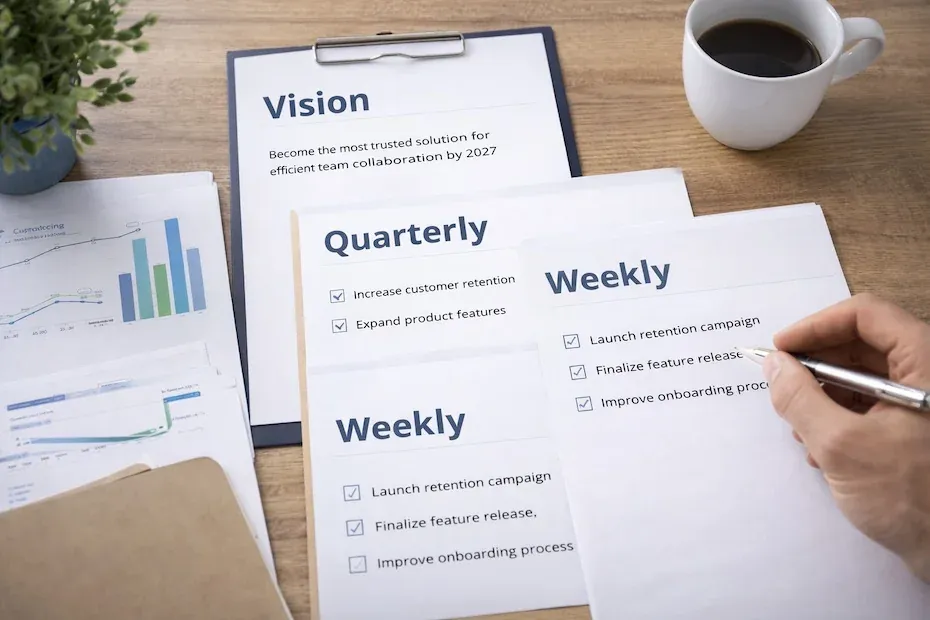
Turn an outcome into a process goal you can practice
Work through learning, writing, and skill-rehearsal examples to define an observable action, a realistic appointment, and a useful review.
The Discipline Code
Field notes on building habits, keeping commitments and returning to the work.
Work through learning, writing, and skill-rehearsal examples to define an observable action, a realistic appointment, and a useful review.

Review one commitment through observable actions, a repair conversation, and a realistic next appointment using a worked writing example.

Try a seven-day routine experiment with a clear cue, a manageable minimum action, and a practical way to return after a missed day.

Plan a manageable cycle of skill practice with scheduled reviews, realistic interruptions, and a return routine after a busy period.

Use a hypothetical global-team communication case to practice bringing an idea from structured study into an observable work experiment.

Practice a tool change with a purpose statement, an observation log, and a worked example of moving a reading notebook into a digital system.

Use a learning problem to practice three explanations, identify missing evidence, and choose a modest test that can change your next decision.

Connect a working explanation with one action, an observable result, and a review date using a fictional study-group example.

Use three short entries to examine whether a daily tool-assisted routine expresses the value you want it to serve.

Prepare a decision card, practice it with a fictional last-minute request, and review whether it helped you clarify responsibility and missing information.
Use a consented conversation, an observed task, and a reversible change to make an everyday shared process easier for the people using it.
Evaluate a new work commitment through its purpose, the capacity it requires, and a small reversible test before making a larger promise.

Track where a digital task stalls, change one step, and compare a week of real attempts before adopting another tool or feature.

Practice a clear promise, a brief check-in, useful feedback, and a repair conversation with a fictional collaborative project.

Listen to Itai Liptz’s published episode and use an original worksheet to separate observations, decisions, and a manageable next attempt.

Use an original reader exercise to define a cue, a manageable action, feedback, and a return plan after listening to The Code Begins.
Work through three everyday dilemmas by separating a value, an assumption, a chosen action, and the consequences you will review.

Work through a fictional drafting task with explicit data boundaries, source checks, human review, and a record of the final decision.

Compare an approved AI-assisted task with your current method using a fixed example set, review time, corrections, and an explicit adoption decision.

Draft a small explanation with a concrete example, check its factual claims, and ask a reader what they can do with it.
Turn one career skill into a week of focused practice, with a worked presentation exercise and a notebook for useful feedback.
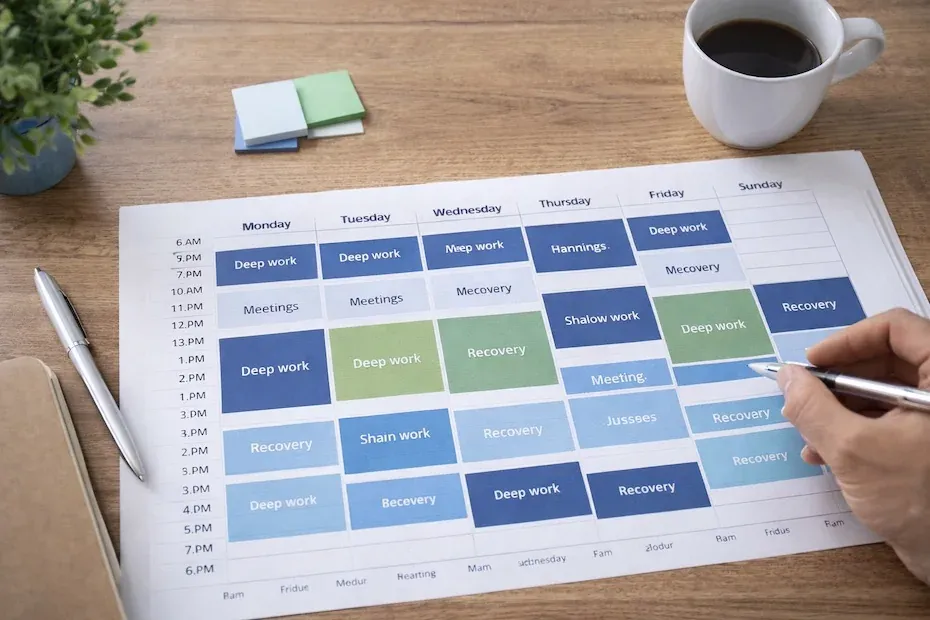
Use a capacity ledger to resize a practice routine, make trade-offs explicit, and plan a realistic return after a demanding week.

Test preparation, focused repetitions, and an error review in a low-stakes work task, using a fictional presentation rehearsal.

Review promises, practice attempts, interruptions, and one adjustment using a worked notebook page before planning the following week.
Use a short preparation note, one clear contribution, and a next-day commitment check to improve your part in a recurring meeting.
Create a small personal dashboard with planned sessions, observed effort, and a clear weekly decision using a worked writing example.
Rehearse an ambiguous handoff with a collaborator and turn it into a clear request, acceptance check, and follow-up routine.
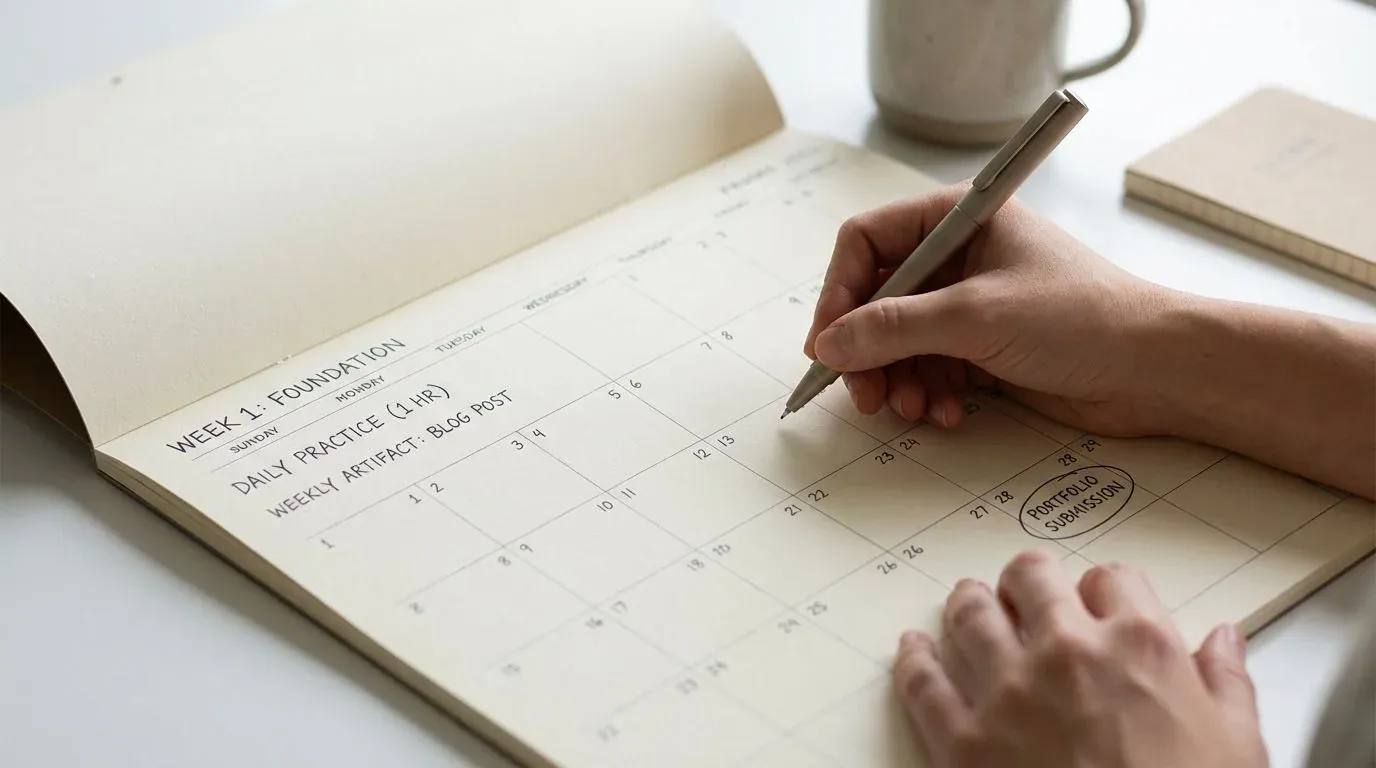
Use four weekly checkpoints to turn a personal task-tracking idea into a usable routine, with a clear test and an honest stop-or-continue decision.